

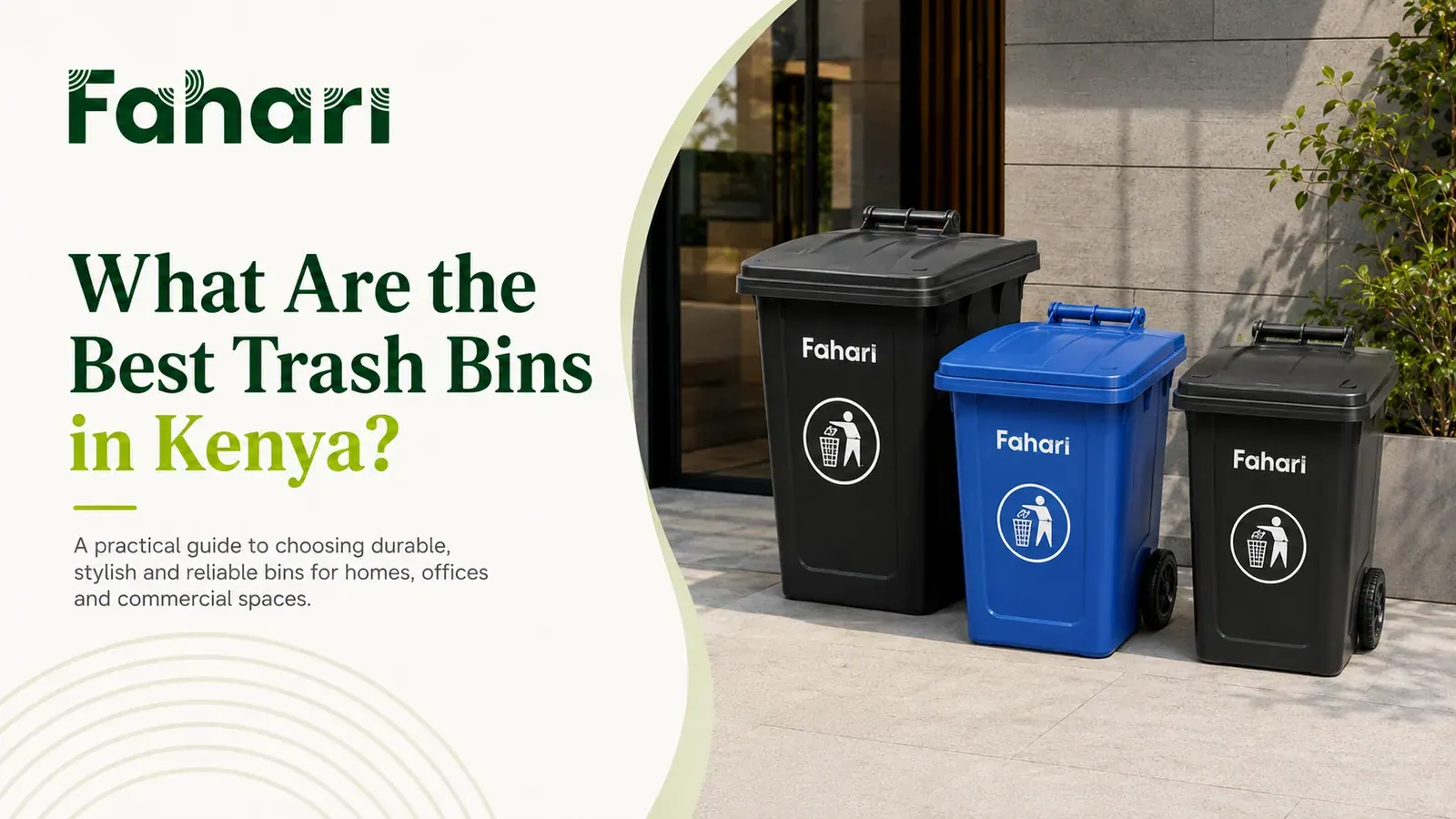
The best trash bins in Kenya are the ones that match how you actually use them. That comes down to a few practical factors: where the bin will be placed, whether it is for a home or a commercial setting, how much waste you generate, how easy it is to move, the lid design, how simple it is to maintain, and the space you have available. Where waste needs to be moved regularly, a wheeled bin with a lid is often the most practical choice.
No single bin is right for everyone, which is why it helps to understand what to look for before you buy. Fahari, a brand under Astral Industries Limited, offers a wheeled trash-bin collection called Fahari Tidy, and it is one option worth keeping in mind as you weigh your needs.
What makes a good trash bin?
A good trash bin does a few simple things well: it keeps waste contained, it is easy to move and clean, and it suits the space it lives in.
A secure lid
A lid helps keep waste contained and gives your waste-storage area a cleaner, tidier look. It also keeps the contents out of direct view, which matters at entrances, offices and shared spaces where appearance counts.
Easy movement
Wheels make a real difference when you need to move waste around. They help when taking waste to collection points, handling larger bins, moving bins around a compound, and managing waste in busy commercial settings.
This is where a wheeled design earns its keep, and it is the core of the Fahari Tidy range, which is built around bins that roll on rear wheels.
Suitable size
The right size depends on your setting. Consider the number of people using the bin, the amount of waste generated, how often it is collected, the space available and the environment it serves.
A small household and a busy restaurant have very different needs, so size should follow use rather than guesswork.
Ease of cleaning
Think about how easy the bin is to access and clean. A bin that is simple to reach into and rinse out is far easier to keep in good condition over time.
Appropriate placement
Finally, consider where the bin will live. A bin used indoors has different demands from one placed outdoors, in a compound, at an office, at a school, at a commercial property or in a hospitality setting. Matching the bin to its place keeps everything working smoothly.
Why choose a trash bin with wheels?
A trash bin with wheels makes it much easier to move waste between storage and collection areas, especially when larger bins are involved. Instead of lifting and carrying, you simply roll the bin where it needs to go.
This is useful in many everyday Kenyan settings, including residential compounds, apartment blocks, schools, offices, restaurants and commercial properties. Anywhere waste has to travel from one point to another, wheels save effort and time.
Fahari Tidy bins are wheeled, which makes them a sensible option to consider where movement is part of your daily waste routine.
Why is a lid important on a trash bin?
A lid is important because it keeps waste contained and creates a tidier, more presentable waste area. It reduces the direct exposure of waste and makes the bin easier to manage visually.
In homes, offices and public-facing spaces, a closed lid simply looks better and keeps the area feeling organised. Fahari Tidy bins come with hinged lids, so the cover stays attached and easy to use.
What size trash bin should you choose?
There is no single correct size — the right one depends on how much waste you produce and how often it is collected. Start by matching capacity to your setting rather than picking the biggest or smallest option by default.
Consider your household size, the number of employees or students, your typical waste volumes, your collection schedule, and the space available for the bin. In commercial and institutional environments, you may need more than one bin to handle the volume comfortably and keep waste points from overflowing.
Best trash bins for homes
For homes, the best trash bin is usually one that is a manageable size, has a lid, is easy to move and simple to maintain. It should fit your space and suit where you plan to keep it, whether that is a kitchen area, a backyard or near the gate.
Where you need to move waste around the compound or out to a collection point, a wheeled bin such as Fahari Tidy is worth considering, since rolling a bin is far easier than carrying it.
Best trash bins for apartments and residential compounds
Apartments and shared compounds generate larger, combined waste volumes, so bins need to handle more and sit near accessible collection areas. Movement between waste points also matters when residents and caretakers are managing waste daily.
A multiple-bin setup often works better than relying on one central bin. Property managers should choose bin sizes and quantities based on the number of residents and how frequently waste is collected, and wheeled options like Fahari Tidy can make moving full bins less of a chore.
Best trash bins for offices and businesses
Offices, shops, restaurants, hotels and commercial buildings each have their own rhythm of waste. The right approach depends on how much waste you generate and how it flows through the day.
Businesses should weigh their waste volume, collection schedule, placement, number of users and how easily bins can be moved. No single bin suits every business, so it is worth mapping your waste points before deciding on size and quantity.
Trash bins for schools and institutions
Schools, colleges, hospitals and other large facilities usually benefit from several bins placed where waste actually builds up, rather than one bin serving a wide area. Strategic placement keeps waste points tidy and easier to manage.
Wheeled bins are helpful here, as waste often needs to be moved from collection points to a central disposal area. When planning for these environments, focus on placement and volume, and follow the waste-management requirements that apply to your facility.
Indoor vs outdoor trash bins
The right choice depends on where the bin will be used. For indoor bins, think about size, the space available, convenience, appearance and how easy the bin is to clean, since it will be seen and used up close.
For outdoor bins, focus on placement, accessibility, ease of movement, lid design and the surrounding environment. An outdoor bin usually needs to handle more and move more, so a wheeled, lidded design tends to be the more practical option.
Plastic vs metal trash bins — which is better?
Neither material is universally better; the right pick depends on your setting and how you plan to use the bin.
Plastic bins
Plastic bins are practical to handle, come in a variety of shapes, and are generally easy to clean. These qualities make them a common choice for many everyday home and commercial environments.
Metal bins
Metal bins offer a different look and can suit particular use cases. In certain commercial environments, their appearance or intended purpose may make them a better fit.
The sensible approach is to match the material to the environment and the way the bin will be used, rather than assuming one is always superior.
What is Fahari Tidy?
Fahari Tidy is Fahari's trash-bin collection, under Astral Industries Limited. The current range is made up of wheeled plastic trash bins with hinged lids, available in different sizes and colours.
Everything in the collection sits under the single Fahari Tidy family name, so whether you need a smaller bin for a home or a larger one for a shared or commercial space, you are choosing within the same range. For current details on sizes and colours, it is best to enquire directly.
| Need | What to look for | Suitable environment |
|---|---|---|
| Easy movement | Wheeled design | Homes, compounds, offices |
| Shared waste collection | Larger bin format | Apartments, schools, businesses |
| Compact waste storage | Smaller bin format | Homes, smaller workplaces |
| Outdoor collection point | Lid and easy-access design | Compounds and commercial spaces |
Fahari Tidy includes wheeled bin options that can be considered for these different waste-management environments, from single-home use to larger shared and commercial settings.
How many trash bins does a property need?
The number of trash bins a property needs depends mainly on how many people use it and how much waste they generate. There is no fixed figure — it scales with activity.
Weigh the number of users, the waste volume, the size of the property, the collection schedule, the distance between activity areas, and whether you are separating waste. For larger properties, several strategically placed bins are usually more practical than one central bin that everyone has to walk to.
How should you maintain a trash bin?
Good maintenance keeps a bin working well and looking presentable. Empty it regularly, clean it when required, and avoid letting waste build up excessively.
It also helps to keep the surrounding bin area tidy, inspect the wheels and lid where applicable, and follow your local waste-management requirements. A few simple habits go a long way toward keeping any bin in good shape.
So, what are the best trash bins in Kenya?
The best trash bins in Kenya come down to your specific situation: the intended environment, the waste volume, the size, ease of movement, lid design, maintenance and the number of users. When these line up with your needs, you have the right bin.
Fahari Tidy provides wheeled trash-bin options for buyers looking for practical waste-storage solutions for homes, businesses and other everyday environments. It is one option to weigh alongside anything else you are comparing, based on what suits your space best.
Find the right Fahari Tidy bin for your space
Before you decide, think about where the bin will be placed, how much waste you generate, how often it will need to be moved, and how many bins you may require. Those four questions point you toward the right size and quantity.
Keep reading
 Buying guideBest Flower Pots in Kenya: How to Choose the Right OneSize, shape, placement and upkeep — the four things that decide which planter is right, and which Fahari shape fits each space.Read the blog
 Buying guideWhere Can I Buy Flower Pots in Kenya?The five places people actually buy planters, what to check before ordering, and how to match a shape to your space.Read the blog